Septic Engineering and Design in Wantage NJ for Environmentally Sensitive Sites
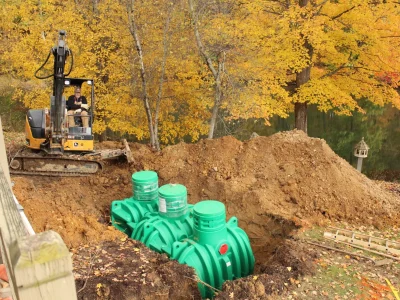

Designing a septic system in Wantage is rarely a simple matter of drawing a tank, a disposal field, and calling it done. In this part of Sussex County, the land has a strong say in what will work. You can have a generous lot on paper and still face tight design constraints once the soils are tested, the slope is measured, and the seasonal high water table reveals itself. Add streams, wetlands, shallow bedrock, or conservation considerations, and septic engineering becomes a careful exercise in judgment rather than a routine permit package.
That is especially true on environmentally sensitive sites. In those cases, septic engineering and design Wantage NJ homeowners and builders need is not just about code compliance. It is about protecting groundwater, preserving nearby surface water, and building a system that keeps performing years after the house is occupied. A design that barely passes a checklist can become an expensive problem when real weather, real usage, and real site conditions begin to stress it.
Why Wantage sites often demand a more careful approach
Wantage has a mix of rural residential properties, wooded tracts, and parcels with varying topography. Some sites are open and forgiving. Others look buildable until the field work starts. I have seen lots where the proposed house footprint fit nicely, but the acceptable area for septic disposal narrowed to a surprisingly small zone once setbacks, drainage patterns, and test results were accounted for.
The challenge often starts with the natural relationship between soil, water, and grade. Septic systems rely on the soil to accept and treat effluent. If the native soils are too tight, too shallow, too wet, or too close to limiting layers, the system cannot safely function in a conventional layout. On a sensitive site, those limitations are not a technical nuisance. They are the central fact of the project.
This is one reason experienced site work matters so much. A septic design is not just a plumbing extension. It is a land use decision with long-term environmental consequences. In Wantage, where private wells are common and groundwater protection matters at the household level, a poor design does not stay isolated on one lot.
What makes a site environmentally sensitive
Not every difficult lot is environmentally sensitive, and not every environmentally sensitive lot is impossible to build. The distinction matters.
A site usually enters sensitive territory when one or more features raise the risk of contaminant migration, system failure, or downstream ecological impact. That can include wetlands and wetland transition areas, intermittent or perennial streams, steep slopes, flood-prone areas, shallow depth to groundwater, highly fractured rock conditions, or unusually permeable soils that move effluent too quickly. It can also include parcels near reservoirs, drinking water supply features, or preserved open space where disturbance carries added scrutiny.
Sometimes sensitivity is obvious. A stream corridor and saturated low ground leave little ambiguity. Other times, it emerges through testing. A lot may look dry in late summer, then show mottling and seasonal saturation indicators in the test pit. That kind of site can fool inexperienced observers because it behaves differently across the year.
The most reliable septic planning starts with accepting that the land tells the truth, not the real estate listing.
The first real milestone is the site investigation
Most septic design problems are either solved or created during the investigation phase. Once that stage is rushed, the rest of the work tends to drift into guesswork, redesign, or expensive revisions.
A proper site review for septic engineering and design Wantage NJ projects should include topographic understanding, field soil logs, percolation or hydraulic testing where required, review of local and state setback requirements, and a realistic assessment of how the home, driveway, grading, drainage, and reserve disposal area will coexist on the lot. The reserve area is a point many owners underestimate. On constrained sites, preserving room for a replacement area can be as difficult as fitting the first one.
I once looked at a rural parcel where the owner had already staked out a large custom home, detached garage, and sweeping driveway before any septic work was done. The lot itself was not tiny, but the buildable upland was. By the time the setbacks from wetlands, the slope limitations, and the tested disposal area were overlaid, the project had boxed itself into a corner. The septic system could still be designed, but the site plan had to shrink and shift substantially. That redesign cost time and money that could have been avoided with early coordination.
That pattern is common enough to mention plainly: on sensitive lots, septic feasibility should be established before architectural ambition hardens into a fixed footprint.
Soil is not a detail, it is the whole story
People often focus on the septic components they can see on a plan, tank size, pump chamber, field layout, force main, inspection ports. The real treatment medium, though, is the soil. The native profile decides whether effluent can be dispersed and renovated safely.
In Wantage, subsurface conditions can vary even within the same property. One test pit may show favorable texture and structure, while another a short distance away reveals dense layers, seasonal saturation, or rock at a limiting depth. On sensitive sites, this variability can make the difference between a conventional trench field and a more specialized system.
A sound designer reads soil beyond the pass-fail level. Texture matters, but so do structure, color patterns, drainage characteristics, and landscape position. A slightly elevated shoulder on the lot may offer the only realistic disposal zone. A lower flat area may look convenient for layout, but function poorly in wet periods. Fine distinctions like these are where engineering judgment earns its keep.
There is also a practical side to soil interpretation that owners appreciate once explained. A marginal site does not merely increase permit complexity. It can affect construction sequencing, long-term maintenance, and even how much of the yard can be disturbed. On a carefully balanced disposal area, future grading, tree removal, runoff concentration, or driveway expansion can shorten system life.
Conventional systems versus advanced options
On a straightforward lot, a conventional gravity system may be enough. On environmentally sensitive sites, that is often not the case. The treatment objective becomes stricter, and the site may demand additional measures to achieve vertical separation, dose control, or improved effluent quality before the wastewater reaches the soil.
That does not mean every difficult lot requires the most elaborate technology available. In practice, good design is usually about matching the system to the site rather than reaching for complexity by default. Advanced treatment units, pressure distribution, low-profile dispersal methods, elevated systems, and pump-assisted layouts each have a place, but each also brings maintenance obligations and cost implications.
Here are common design considerations that tend to shape system selection on sensitive sites:
- Available vertical separation between the disposal surface and limiting zone.
- Slope and the site’s ability to support stable grading.
- Effluent quality needed before soil dispersal.
- Location of wells, water features, and required setbacks.
- Long-term access for service, pumping, and repair.
These are not abstract design inputs. They affect how the system behaves in January thaw conditions, after a week of heavy rain, or during extended periods of high household use. A system that looks elegant on paper but is difficult to maintain or septic engineering and design Wantage NJ excavatingnj.com vulnerable to seasonal wetness is not good engineering.
Water table and drainage are often the deciding factors
Many septic failures blamed on the equipment are actually drainage failures in disguise. The system may have been technically permitted, but the broader site water management was never handled correctly.
On sensitive Wantage lots, roof runoff, driveway drainage, upslope seepage, and grading around the disposal field deserve close attention. Septic areas should not become the unintended receiving basin for the rest of the property. Yet this happens regularly when site design disciplines work in isolation. A house designer places downspout discharge wherever it is convenient. A driveway is crowned without considering where concentrated runoff will go. A retaining wall changes subsurface water movement. Then the septic field bears the consequences.
This is why septic engineering should be integrated with the overall civil layout. Drainage swales, curtain drains when appropriate, finished grades, driveway elevations, and discharge points need coordination. On a forgiving site, mistakes may stay hidden for years. On a sensitive one, they show up fast.
There is also a timing issue. A site tested during a relatively dry period can still contain evidence of seasonal saturation if the investigator knows what to look for. Relying on surface dryness alone is risky. The ground often remembers what the weather has done, even when the owner visiting the lot does not.
Setbacks are not just bureaucratic lines
Homeowners sometimes view setbacks as arbitrary obstacles, especially when the lot feels spacious. But on environmentally sensitive properties, setbacks are one of the simplest and most important protective tools. They create distance for treatment, dilution, and risk reduction.
A disposal field placed too close to a well, wetland, stream corridor, or property boundary is not simply noncompliant. It may reduce the soil’s ability to finish the treatment process before effluent reaches a receptor. The same logic applies to separation from buildings, cuts, fills, and other site features that could affect loading or physical integrity.
The practical difficulty is that setbacks interact. A location that works relative to the house may fail relative to a neighboring well. A reserve area that clears one constraint may interfere with driveway access or grading. Sensitive site design is often a puzzle where moving one piece affects every other piece.
This is another reason broad parcel acreage can be misleading. Ten acres with fragmented constraints may be harder to design than two open acres with favorable soils.
Preserving a replacement area takes discipline
A septic system should be designed with its own future in mind. Even a well-built system will not last forever, and regulations generally require reserve disposal area for that reason. On constrained sites, owners may be tempted to treat the reserve area as theoretical space that can later become lawn extension, parking, a shed location, or ornamental grading. That is a mistake.
The reserve area should remain protected from compaction and disturbance. Heavy equipment damage during construction is common, especially when trades treat open land as staging area. Once soils are compacted or altered, that backup option may be degraded before the house is even finished.
A good project team marks these protected zones early and treats them seriously. It is far cheaper to preserve a reserve area than to engineer around its loss later.
Construction quality can make or break a good design
A careful design does not guarantee a successful installation. Sensitive sites magnify construction errors. Small deviations in trench depth, aggregate placement, pressure manifold leveling, or final grading can materially affect performance.
Some of the more common field problems come from contractors trying to “help” by making intuitive adjustments that conflict with the approved intent. They may smooth an area too aggressively, overexcavate and backfill where native soil should remain undisturbed, substitute materials without verifying equivalency, or route equipment across the disposal area when the ground is wet. None of those decisions looks dramatic in the moment. Together, they can shorten the life of the system.
The best results usually come when the engineer remains involved during installation, inspections occur at the right moments, and any necessary field changes are evaluated before they are executed. That level of oversight is especially important in septic engineering and design Wantage NJ projects where the available margin for error is slim.
Regulatory coordination is part of the engineering
One reason septic work on sensitive sites can feel slow is that several layers of review may intersect. Local health department requirements, state environmental constraints, and lot-specific conditions all influence the final design. None of that is unusual, but it means the process benefits from realistic scheduling.
Permitting delays often come not from agency reluctance, but from incomplete submissions, inconsistent site plans, or premature assumptions. When the architectural layout, grading concept, and septic plan are not aligned, reviewers notice. Then the project returns for revision.
That is why front-end coordination matters. It is easier to solve conflicts before drawings are finalized than after submissions are made and contractors are mobilized. Owners usually appreciate this once they understand that a few extra weeks of disciplined planning can prevent months of redesign and field delay.
Cost on sensitive sites is about more than installation
People naturally ask what a system will cost, but the better question is what ownership will cost over time. On environmentally sensitive lots, that includes not just construction but pumping frequency, service contracts if advanced treatment is used, power consumption for pumps or control panels, monitoring, and the cost of preserving access for future repairs.
A simple gravity system on favorable ground is usually cheaper to own than a pumped or advanced treatment system. That said, forcing a conventional approach onto an unsuitable site can be more expensive in the long run if it leads to premature failure or chronic wetness. The cheapest initial design is not always the most economical outcome.
A practical way to think about cost is to compare systems across the full ownership horizon, not just the permit phase. A homeowner who understands maintenance responsibilities from the start tends to make better decisions and experiences fewer surprises later.
What property owners can do before design begins
Sensitive site septic work goes more smoothly when owners prepare well and keep expectations flexible. A few habits make a noticeable difference:
- Test the site early, before finalizing house and driveway layout.
- Share any prior surveys, soil logs, and environmental information up front.
- Keep heavy equipment off proposed disposal and reserve areas.
- Plan for maintenance access, not just initial installation.
- Expect the land to shape the design, rather than the reverse.
That last point is the hardest for some projects. Owners often begin with a mental image of the house, the yard, and the outbuildings. On an easy lot, many of those preferences can survive intact. On a sensitive lot, the strongest projects are the ones willing to adapt early instead of fight the site all the way through review.
The value of experience on difficult parcels
There is a clear difference between routine septic drafting and true site-responsive engineering. On easy lots, that gap may be hard to see. On environmentally sensitive parcels, it becomes obvious very quickly.
Experience shows up in small but important decisions. It shows up in where the test pits are located, how conflicting site constraints are prioritized, when to preserve optionality in the layout, and when to tell a client that the desired building envelope is too aggressive. It also shows up in the willingness to think beyond minimum compliance. Some of the best septic designs are not the ones that merely pass, but the ones that remain forgiving through wet seasons, household changes, and years of use.
In Wantage, where rural land can appear deceptively simple from the road, that level of experience matters. A field with a nice view may hide a shallow limiting layer. A wooded lot may have only one practical disposal zone. A broad backyard may actually carry subsurface drainage from uphill terrain. None of these conditions is rare. They are the everyday reality of designing responsibly in places where the landscape still leads.
A durable septic design respects both the house and the land
A well-designed septic system should feel uneventful once it is in service. It should fit the property, protect water resources, and operate without constant attention beyond normal maintenance. Reaching that outcome on an environmentally sensitive site takes more effort at the beginning, not less.
That means good testing, honest interpretation of site limits, coordination with the overall development plan, and system selection grounded in performance rather than sales language. It means treating setbacks, drainage, and reserve areas as functional necessities. It means recognizing that the lot itself is the most important design partner in the process.
When septic engineering and design Wantage NJ property owners pursue is handled with that mindset, even constrained sites can often be developed responsibly. The goal is not to overpower the land. It is to work with its limits carefully enough that the finished system protects both the home and the environment for septic engineering and design Wantage NJ the long haul.
Excavating New Jersey LLC
406 County Road 565
Wantage, NJ 07461
(973) 791-4284
FAQ About septic engineering and design Wantage NJ
Who can design a septic system?
A New Jersey licensed professional engineer can assess the property and prepare the design. The local administrative authority can explain the applicable submission and permit requirements.
Why would I need an engineered septic system?
Soil conditions, groundwater, setbacks, lot size, or the expected wastewater flow can affect which designs are suitable. A site evaluation helps identify options for the property.
How much does it cost for an engineer to design a septic system in NJ?
Costs vary with site conditions, testing, surveying, and the scope of the design. Ask for an itemized quote that separates engineering, tests, permits, and installation.